A suffix is an ending we can attach to a word to express grammatical relationships (inflectional suffix) or to create a new word (derivational suffix).
Inflectional suffixes
Inflectional suffixes can be used to mark:
- a plural noun e.g. house → houses (-s, -es or -ies suffix)
- a past tense verb e.g. walk → walked (-ed suffix)
- a possessive noun e.g. dog → dog’s (-‘s or -s’ suffix)
- a 3rd person singular present tense verb e.g. jump → jumps (-s suffix)
- a present (-ing) participle e.g. fly → flying (-ing suffix)
These endings carry grammatical information. They usually change the form of a word rather than its class – although the -ly suffix is added to an adjective to create an adverb e.g. slow → slowly.
Derivational suffixes
We use derivational suffixes to create new words which often have a different word class to the original word or base.
- kind (Adj) + -ness → kindness (N) [-ness is a Latin suffix denoting ‘quality of’]
- defence (N) + -less → defenceless (Adj) [-less is a Latin suffix denoting ‘without’)
- able (Adj) + -ity → ability (N) [-ity is a Latin suffix denoting ‘state’, ‘condition’]
- dedicate (V) + ion → dedication (N) [-tion is a Latin suffix denoting ‘act of’]
- pac (N, peace; from the Latin pax) + ify → pacify (V) [-ify is a Latin suffix denoting ‘to make’]
-ism and -ist
But enough about the general cases, the source of this post was a radio discussion about the lack of older women on television news. The presenter used the word lookist to describe our society and it seemed a great place to start …
The OED cites its use as an adjective in the phrase ‘an unrepentant lookist pig’ (i.e. relating to discrimination on the

grounds of appearance’), and as the noun
lookism (i.e. prejudice or discrimination on the basis of appearance)
as early as 1978. In 1990, the noun lookist (i.e. a person who discriminates on the grounds of appearance) is recorded.
This word formation follows a well-worn pattern using the Greek suffixes -ism (i.e. ‘belief in’) and -ist (i.e. ‘one who believes in’).
-ism
Many of our traditional -ism nouns use a Greek base, often loans which have entered English through Latin and French borrowings.
aestheticism: belief in or pursuit of what is beautiful or attractive to the senses, rather than appealing to the ethical or rational (first use 1840)
From the ancient Greek αισθητικòς (= aesthetic i.e. ‘of or relating to the senses’) + -ism (i.e. ‘belief in’)
amateurism: belief in or pursuit of the amateur (first use 1868)
From the French amateur and the Latin amator (‘lover’), amare (‘to love’) – from the 18th century, a person who does anything as a pastime rather than as a profession (now often disparaging)
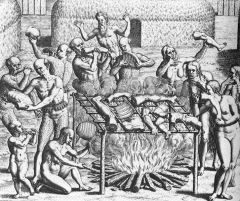 cannibalism:
 the practice of eating flesh of one’s own species (first use 1796)
From the 16th century Spanish Canibales, originally one of the names for the Carib tribe of the West Indies, who are recorded as being ‘anthropohagi’ (Latin plural of anthropophagus, from the Greek ανθρωποφαγος, ‘man-eating’)
The -ism suffix can be used to denote a range of meanings:
1. ‘the practice of …’
Noun of action (often linked to –ise/-ize verbs)
baptism – the act or ceremony of being baptised (first use 1377; from ME bapteme from Old French baptesme, Latin baptismus and Greek βαπτισμος)
plagiarism – the act or practice of taking someone else’s work without acknowledgement and using it as one’s own (first use 1621; from Latin plagiarus = ‘person who abducts the child or slave of another’, also ‘literary thief’)
bicyclism – the activity of riding a bicycle (first use 1870, but now rare; from French noun bicycle)
Noun describing the action of a group of people
heroism – action and qualities of a hero (first use 1667; from French héroïsme)
hooliganism – action and behaviour of a hooligan (first use 1898; eytmology uncertain – the name ‘Hooligan’
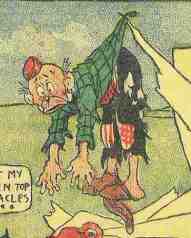
appeared in an 1890s music-hall song about a rowdy Irish family, and as an
Irish character in a series of stories)
patriotism – quality of being a patriot (first use 1716; from Middle French patriote, Latin patriota and Greek πατριωτης)
2. ‘the condition of …’
Medical
albinism – condition of being an albino (first use 1827; probably from Frenchalbinisme 1806)
autism – condition marked by difficulties engaging with other people and abstract concepts, often accompanied by impaired speech development or unusual speech patterns (first use 1912; from Latin autismus andGreek αúτòς ‘self’)
Language
colloquialism – informal, conversational language (first use 1834; from Latin colloquium, ‘speaking together, conversation’)
Latinism – language using a distinctively Latin idiom or expression (first use 1570; from Latinus, area of Italy containing Rome, adopted into Old English as læden, reflecting Celtic pronunciation of ‘Latin’)
neologism – words that are newly created (first use 1772; from French néologisme, 1734)
malapropism – words that are used mistakenly in place of another similar word e.g. ‘punctuation’ for ‘punctuality’, or ‘distressing’ for ‘de-stressing’ (first use 1830; from the name of Mrs Malaprop, a character in The Rivals, a play by Sheridan in 1775)
Proper nouns
Pollyannaism – behaviour characteristic of Pollyanna, i.e. persistent and often irrational optimism  (first use 1924; from the name of Pollyanna Whittier, a character inPollyanna, a children’s novel by Eleanor H. Porter written in 1913)
Whiteboyism – the principles and practices of the Irish Whiteboys (first use 1777, now historical; from the name for members of a secret agrarian association in Ireland, who wore white shirts over their clothes so they could see each other at night)
Blairism – political policies and principles advocated by Tony Blair, Prime Minister 1997-2007 (first use 1994; from the name)
3. ‘the belief in …’
A system or theory
Conservatism – believing in the political principles of the Conservative Party (first use 1832; from French conservateur 1795 i.e. focus on maintaining traditional institutions and promoting individual enterprise)
Humanism – believing in human rationality and capacity for free thought, secular rather than religious/spiritual (first use 1853; from Anglo-Norman humeigne and Latin humanus)
Chartism – believing in the democratic principles of the Chartists (first use 1839; from Latin charta)
A particular doctrine or principle
 feminism – promotion of equal rights for women in political, social and economic terms (first use 1895; from Latin femina, ‘woman’, and the French adjective féministe, 1872)
jingoism – bragging about a country’s readiness to fight or to behave aggressively towards foreign powers, an extreme form of patriotism (first use 1878; from the expression ‘by Jingo’ in a music-hall song which became the theme of the supporters of Lord Beaconsfield who wished to send the British fleet to fight Russia in 1878)
opportunism – exploiting circumstances and opportunities for personal/political advantage (first use 1870; from Italian oppportunismo and French opportunisme 1869)
The superiority of one group over another
racism – prejudice against people of other races (first use 1926; from French race and Italian razza)
sexism – prejudice typically against women based on stereotyping (first use 1934; from Middle French sexe, ‘the genitals’, and Latin sexus, ‘the state of being male or female’)
4. ‘discrimination against …’
ageism – discrimination on the grounds of age (first use 1969; from Anglo-Norman aege and Old French aé and Latin aetat-, ‘the length of time a person has lived’)
lookism – discrimination against people because of their appearance (first use 1978; from Old English lócian)
A historical perspective
Following the Latin and Greek models, this helpful little suffix has been used to form the names of religious and philosophical systems, and to describe distinctive ways of looking at the world. We can trace its use over centuries:
paganism 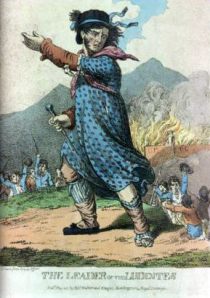 Christianism (1576, now obsolete)martialism (1608)Stoicism (1626)latitudinarianism (1676)
Islamism (1696)Predestinarianism (1722)
Buddhism (1801)Luddism (1812)imperialism (1858)reincarnationism (1907)
Rachmanism (1963)Orwellianism (1976)bioterrorism (1987)
cyberterrorism (1994)prepperism (i.e. the belief that we need to make advance preparations in order to be able to cope with any disaster, or the end of the society as we know it – not yet in dictionaries, but being used on the internet 2012)
-ism words chart changes in our scientific and technological capabilities, in our attitudes, and in our broadening experiences of other cultures and belief systems.
Evidence that the -ism suffix continues to be linguistically central to our ever-growing word stock can be seen in words like obeseism and gingerism. These are recorded in Wiktionary, are used in the media and can be found in all kinds of contexts online, but have not yet made it into an up-dated entry in the OED. The suffix even became a noun in its own right as early as 1680: ism, any distinctive doctrine, theory or practice (often used disparagingly).
-ist
Our -ist nouns correspond to the French -iste, Latin –ista, Greek ιστης. Initially, these were endings attached to –ize/ -ise verb stems to form an agent noun (e.g.antagonize → antagonist; ), but in English the suffix is now used more widely. It can be used with -ism nouns (e.g. pacifism → pacifist), with adjectives (e.g.fatal → fatalist), and by analogy (psychiatry → psychiatrist). These -ist nouns can name the followers of a particular group or principle, or the practitioners of a particular process, art or skill. As a noun in its own right, ist was first used in 1811.
 baptist:
 a person who baptizes (first use 1200); member of the religious body that practises baptism by total immersion for believers (first use 1654)
From the Old French baptiste, the Latin baptista (‘lover’) and the Greek βαπτιστης
chemist: a person who practices or studies chemistry (first use 1559)
From Middle French chimiste and Latinchimista + -ist
Marxist: a person who believes in the theories and principles of Karl Marx (first use 1873)
From the name of the revolutionary thinker and philosopher Karl Marx (1818-1883)
The -ist suffix can be used to denote the following meanings:
1. ‘one who believes in …’
Methodist (first use 1593; from Latin methodus, ‘mode of proceeding’, and Greek μεθοδος, ‘pursuit of knowledge’)
royalist (first use 1605; from Anglo-Norman roial and Middle French royaliste)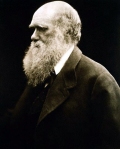
Darwinist (first use 1864; from the name of Charles Darwin)
victimologist (first use 1971; from French victimologie, 1956)
2. ‘one who engages in …’
Often a word of Greek origin
ophthalmologist – someone who diagnoses and treats diseases associated with the eyes and defects of vision (first use 1826; from Greek οφθαλμος, ‘eye’)
archaeologist – someone who studies archaeology (first use 1824; from the Greek αρχαιος, ‘ancient’, and λογια, ‘discourse’)
Later words are from Latin sources
theorist – someone who is skilled in the theory of a subject (first use 1594; from Latin theoria and Greek θεωρια)
journalist – someone who earns a living from editing or writing for a journal, magazine or newspaper (first use 1693; from Old French jurnal and Latin diurnal, ‘of or belonging to a day’)
Now widely used to denote people in professions, businesses and other activities
environmentalist (first use 1903)
escapologist (first use 1926)
consumerist (first use 1944)
hypnotherapist (first use 1958)
ergonomist (first use 1959)
bioethicist (first use 1973)
3. ‘one who displays prejudiced views’
racist (first use 1926)
sexist (first use 1949)
Watch out for additions to the language – like Ecopreneurist (a blog about sustainable business) and WebUrbanist (a website focusing on global art and design).