Sunday, July 2, 2017

Extreme Mountain Trail Of Why The Star Is A Badge And The Ring Is More Than Any Will Know As Not One Inquiry For These Writes Has Come To Say "Why The Pain, The Memory Or The Lane?"


Liberty Bell

From Wikipedia, the free encyclopedia
https://simple.wikipedia.org/wiki/Liberty_Bell
The Liberty Bell is an important symbol of American freedom.
The Liberty Bell is an important and famous symbol of American independence (freedom). It used to be in the Pennsylvania State House (now known as Independence Hall). The bell was ordered from the London firm of Lester and Pack (which is known as the Whitechapel Bell Foundry today) in 1752. It had the letters "Proclaim LIBERTY throughout all the land unto all the inhabitants thereof." This was a part of Leviticus 25:10. It first cracked when it was first rung when it came to Philadelphia, and was made again twice by John Pass and John Stow. . .


The United States of America in the War of the lines,
it is the fact that these torn charge to chance a Monopoly,
the bored to the frisk,
a pager's on the mile of cell phones in the times.

Multiply the Mountains,
valley's have horror to chance,
note to that is the vista of the views,
in climbing to the Plateau as that is a flat that is of a bridge.

Rising in the sky is that lightning of bolts,
silk trades to roads,
the winding paths that horses are not broke,
the harness of this bridle is the girth of breadth,
to raft a canoe or to understand the style.

Whether it is the Redwood or Yosemite,
the breeze is the ease see,
it encompasses I to know of the Founding Father that first on the filed,
shaved ice to that is the glacier of so much,
cattle bunch to heard as the crossing of river is bottom creek.

Stature is roam,
wind is not a fire on the plains,
buffalo comfort the hide is still frame of the skull to bone,
dirt or the mud did cactus,
the needle in the air a zone uh?,
know this comprehension as the grasp is more than stone.

To be of the Frank in character and not of in cents,
it removed the wash and made evident the care,
as what is a saddle with direct reins in English,
is it the dressage at the sconce of the three-day eventer as the cross-country did stadium?,
does the conditioning morn. to the roads and tracks?,
is the halter and the lead line of temper to this storm of quick released?

Does the snap to the care a be err anger the stick to pause,
should the climb water to the Ancient ocean on the lake of deep rift,
there in the Grand Canyon such Tale of this crave a bell,
the liberty of the brass to the crack in it's shell,
what is a mould that marked the removal of the sound,
that idea of Constitution,
the declaration or the independence,
it is the pen that inked,
the signature piece!!

The Liberty Bell
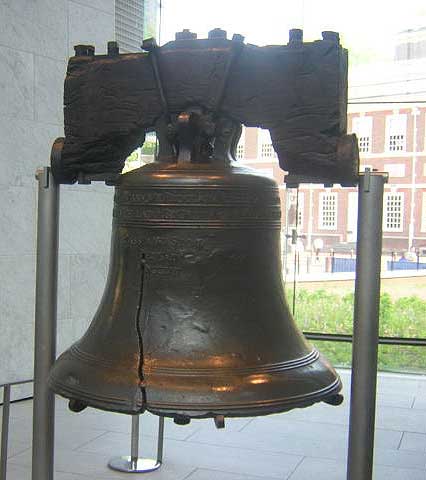

Liberty Bell
Tradition tells of a chime that changed the world on July 8, 1776, with the Liberty Bell ringing out from the tower of Independence Hall summoning the citizens of Philadelphia to hear the first public reading of the Declaration of Independence by Colonel John Nixon.
The Pennsylvania Assembly ordered the Bell in 1751 to commemorate the 50-year anniversary of William Penn's 1701 Charter of Privileges, Pennsylvania's original Constitution. It speaks of the rights and freedoms valued by people the world over. Particularly forward thinking were Penn's ideas on religious freedom, his liberal stance on Native American rights, and his inclusion of citizens in enacting laws.
virtual
The Liberty Bell gained iconic importance when abolitionists in their efforts to put an end to slavery throughout America adopted it as a symbol.
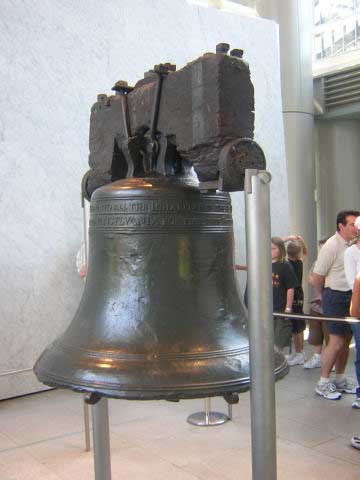
As the Bell was created to commemorate the golden anniversary of Penn's Charter, the quotation "Proclaim Liberty throughout all the land unto all the inhabitants thereof," from Leviticus 25:10, was particularly apt. For the line in the Bible immediately preceding "proclaim liberty" is, "And ye shall hallow the fiftieth year." What better way to pay homage to Penn and hallow the 50th year than with a bell proclaiming liberty?
bell2
Also inscribed on the Bell is the quotation, "By Order of the Assembly of the Province of Pensylvania for the State House in Philada." Note that the spelling of "Pennsylvania" was not at that time universally adopted. In fact, in the original Constitution, the name of the state is also spelled "Pensylvania." If you get a chance to visit the second floor of Independence Hall in Philadelphia, take a moment to look at the original maps on the wall. They, too, have the state name spelled "Pensylvania" (and the Atlantic Ocean called by the name of that day, "The Western Ocean"). The choice of the quotation was made by Quaker Isaac Norris, speaker of the Assembly.
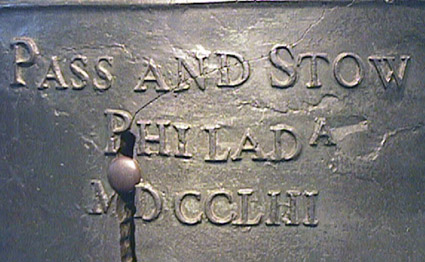
Centered on the front of the Bell are the words, "Pass and Stow / Philada / MDCCLIII." We'll get to Pass and Stow in a bit.

The Crack


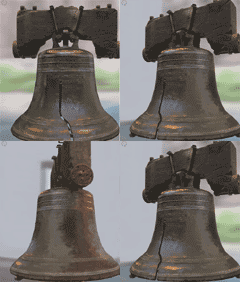
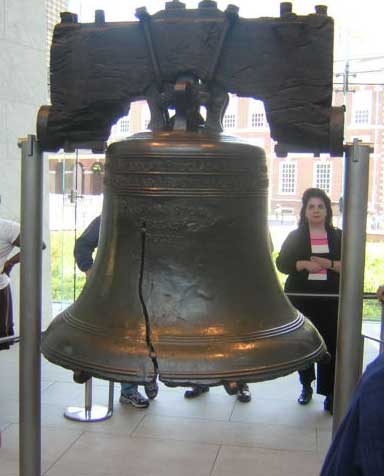
There is widespread disagreement about when the first crack appeared on the Bell. Hair-line cracks on bells were bored out to prevent expansion. However, it is agreed that the final expansion of the crack which rendered the Bell unringable was on Washington's Birthday in 1846.
The Philadelphia Public Ledger takes up the story in its February 26, 1846 publication:
"The old Independence Bell rang its last clear note on Monday last in honor of the birthday of Washington and now hangs in the great city steeple irreparably cracked and dumb. It had been cracked before but was set in order of that day by having the edges of the fracture filed so as not to vibrate against each other ... It gave out clear notes and loud, and appeared to be in excellent condition until noon, when it received a sort of compound fracture in a zig-zag direction through one of its sides which put it completely out of tune and left it a mere wreck of what it was."

The Bell as Icon
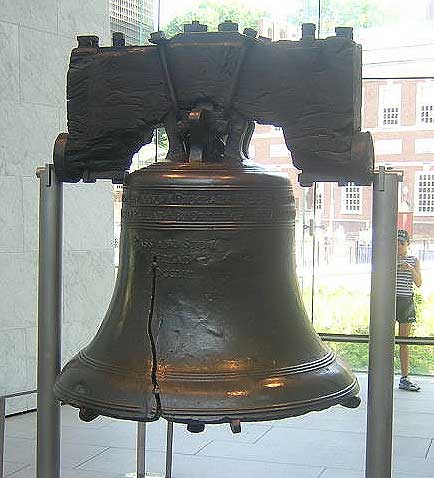

Liberty Bell
libertybell
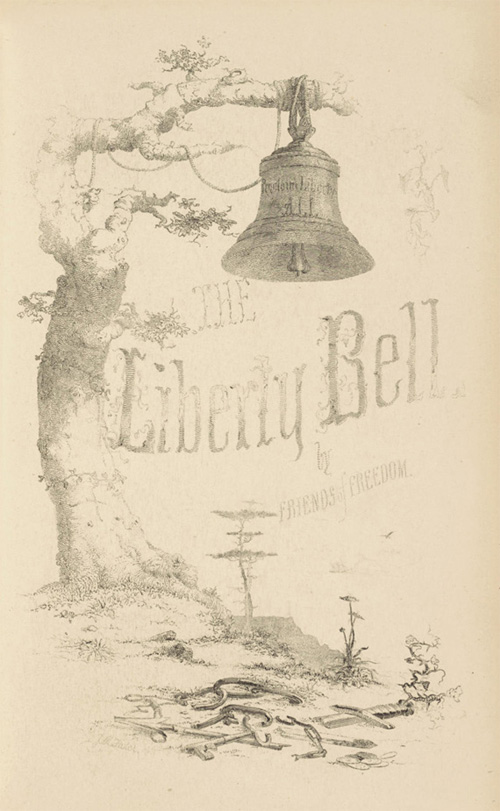
The Liberty Bell. Boston: American Anti-Slavery Society, 1856
The Bell achieved its iconic status when abolitionists adopted the Bell as a symbol for the movement. It was first used in this association as a frontispiece to an 1837 edition of Liberty, published by the New York Anti-Slavery Society.
It was, in fact, the abolitionists who gave it the name "Liberty Bell," in reference to its inscription. It was previously called simply the "State House bell."
In retrospect, it is a remarkably apt metaphor for a country literally cracked and freedom fissured for its black inhabitants. The line following "proclaim liberty" is, "It shall be a jubilee unto you; and ye shall return every man unto his possession, and ye shall return every man unto his family." The Abolitionists understood this passage to mean that the Bible demanded all slaves and prisoners be freed every 50 years.
William Lloyd Garrison's anti-slavery publication The Liberator reprinted a Boston abolitionist pamphlet containing a poem about the Bell, entitled, The Liberty Bell, which represents the first documented use of the name, "Liberty Bell."

The Bell and the Declaration of Independence

Liberty Bell
In 1847, George Lippard wrote a fictional story for The Saturday Currier which told of an elderly bellman waiting in the State House steeple for the word that Congress had declared Independence. The story continues that privately he began to doubt Congress's resolve. Suddenly the bellman's grandson, who was eavesdropping on the doors of Congress, yelled to him, "Ring, Grandfather! Ring!"
This story so captured the imagination of people throughout the land that the Liberty Bell was forever associated with the Declaration of Independence.
The truth is that the steeple was in bad condition and historians today highly doubt that the Bell actually rang in 1776. However, its association with the Declaration of Independence was fixed in the collective mythology.

Bell as Symbol


After the divisive Civil War, Americans sought a symbol of unity. The flag became one such symbol, and the Liberty Bell another. To help heal the wounds of the war, the Liberty Bell would travel across the country.
Starting in the 1880s, the Bell traveled to cities throughout the land "proclaiming liberty" and inspiring the cause of freedom. We have prepared a photo essay of its 1915 journey to the Panama-Pacific Exposition in San Francisco.
A replica of the Liberty Bell, forged in 1915, was used to promote women's suffrage. It traveled the country with its clapper chained to its side, silent until women won the right to vote. On September 25, 1920, it was brought to Independence Hall and rung in ceremonies celebrating the ratification of the 19th amendment.
To this day, oppressed groups come to Philadelphia to give voice to their plight, at the Liberty Bell, proclaiming their call for liberty.

History of the Bell

Liberty Bell
On November 1, 1751, a letter was sent to Robert Charles, the Colonial Agent of the Province of Pennsylvania who was working in London. Signed by Isaac Norris, Thomas Leech, and Edward Warner, it represented the desires of the Assembly to purchase a bell for the State House (now Independence Hall) steeple. The bell was ordered from Whitechapel Foundry, with instructions to inscribe on it the passage from Leviticus.
The bell arrived in Philadelphia on September 1, 1752, but was not hung until March 10, 1753, on which day Isaac Norris wrote, "I had the mortification to hear that it was cracked by a stroke of the clapper without any other viollence [sic] as it was hung up to try the sound."
The cause of the break is thought to have been attributable either to flaws in its casting or, as they thought at the time, to its being too brittle.
bell10
Two Philadelphia foundry workers named John Pass and John Stow were given the cracked bell to be melted down and recast. They added an ounce and a half of copper to a pound of the old bell in an attempt to make the new bell less brittle. For their labors they charged slightly over 36 Pounds.
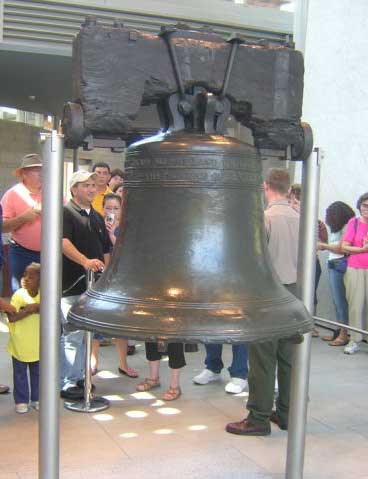
Liberty Bell
The new bell was raised in the belfry on March 29, 1753. "Upon trial, it seems that they have added too much copper. They were so teased with the witticisms of the town that they will very soon make a second essay," wrote Isaac Norris to London agent Robert Charles. Apparently nobody was now pleased with the tone of the bell.
Pass and Stow indeed tried again. They broke up the bell and recast it. On June 11, 1753, the New York Mercury reported, "Last Week was raised and fix'd in the Statehouse Steeple, the new great Bell, cast here by Pass and Stow, weighing 2080 lbs."
In November, Norris wrote to Robert Charles that he was still displeased with the bell and requested that Whitechapel cast a new one.
Upon the arrival of the new bell from England, it was agreed that it sounded no better than the Pass and Stow bell. So the "Liberty Bell" remained where it was in the steeple, and the new Whitechapel bell was placed in the cupola on the State House roof and attached to the clock to sound the hours.
The Liberty Bell was rung to call the Assembly together and to summon people together for special announcements and events. The Liberty Bell tolled frequently. Among the more historically important occasions, it tolled when Benjamin Franklin was sent to England to address Colonial grievances, it tolled when King George III ascended to the throne in 1761, and it tolled to call together the people of Philadelphia to discuss the Sugar Act in 1764 and the Stamp Act in 1765.
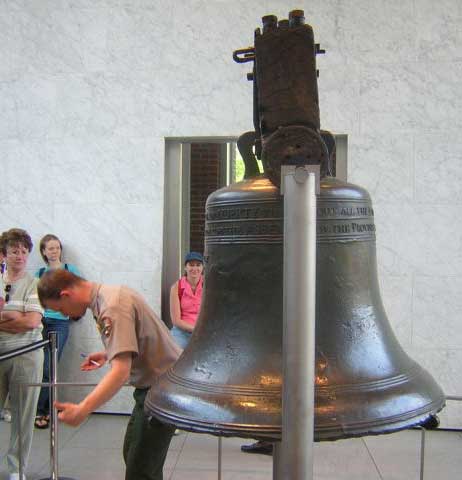
Liberty Bell
In 1772 a petition was sent to the Assembly stating that the people in the vicinity of the State House were "incommoded and distressed" by the constant "ringing of the great Bell in the steeple."
But, tradition holds, it continued tolling for the First Continental Congress in 1774, the Battle of Lexington and Concord in 1775 and its most resonant tolling was on July 8, 1776, when it summoned the citizenry for the reading of the Declaration of Independence produced by the Second Continental Congress. However, the steeple was in bad condition and historians today doubt the likelihood of the story.
In October 1777, the British occupied Philadelphia. Weeks earlier all bells, including the Liberty Bell, were removed from the city. It was well understood that, if left, they would likely be melted down and used for cannon. The Liberty Bell was removed from the city and hidden in the floorboards of the Zion Reformed Church in Allentown, Pennsylvania, which you can still visit today.
Throughout the period from 1790 to 1800, when Philadelphia was the nation's capital, uses of the Bell included calling the state legislature into session, summoning voters to hand in their ballots at the State House window, and tolling to commemorate Washington's birthday and celebrate the Fourth of July.

The Bell Today
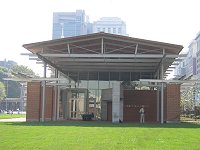
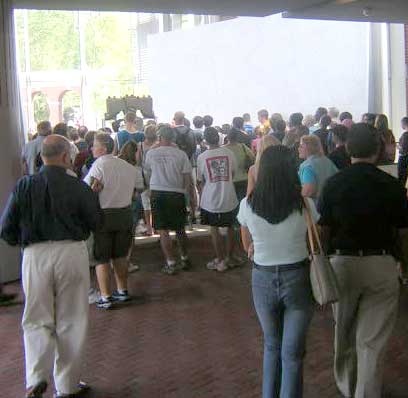
The Liberty Bell Center was opened in October, 2003. From the southern end, the bell is visible from the street 24 hours a day.
On every Fourth of July, at 2pm Eastern time, children who are descendants of Declaration signers symbolically tap the Liberty Bell 13 times while bells across the nation also ring 13 times in honor of the patriots from the original 13 states.
Each year, the bell is gently tapped in honor of Martin Luther King Day. The ceremony began in 1986 at request of Dr. King's widow, Coretta Scott King.

Saturday, July 1, 2017

In Honor of Detective Benjamin Marconi, Badge #2382 of The San Antonio Police Department, SAPD!!!!


The stubble of the Pedestal to the Plaque of the stall door is as the barn of the Pastured,
it is the reply of only the foot to foot,
as the hemisphere!!

Should the back to basic not grain the Cactus the water reserved,
salt once the ocean at the lake,
this is neither the sword or the Sway!!

 A fin a Gin,
the Mills as the Wheats of Fields grace only the Exits,
to trough of Wells in the Family Ross,
no stir to that pace of residence as the find Mother Earth is of grounds!!

Trouble nice the ant and Elephant this coffee,
to discuss compression is to comprehend the Finnish?,
no,
it is the Circus.

A fact that the Trains no longer realm to what is a dome,
the crown of the brain as the skull without cross boned,
a garden inch without the plow.

Great exportation's?,
just say the Monroe Doctrine as that is the Fax to understand that blunt?,
no,
it is the choice of the Continent on a raft tier already found at the 2008 chore,
a balance is the choice to have continued on the write for the left,
there is the From and yet it was also the plain,
never in explosion as the Buffalo rode my mind to that Police Officer and his horse,
the bit to that is the private language giving more then a stein!!

Simple to that is the direction of the SFPD touching note as the drive of their Cars,
in the case by done to this 'cliff note' been,
each avenue and every street to alley as the Lombard in that Van Ness,
the Jack Tar to the *Hofbrau gives memory a harness in my life,
there is no question that is not found on that directive,
the CHP to the Sheriff on the exchange across this land,
these are the complexities that wonder Mankind?,
why the traveling Blues to the sing of lyrics as a chose?,
formidable Time in the Ages plus Plato on the Verse to what is a future?,
no,
just the seam of the stitch in that is the Nine,
add the Eleven and comprehend the memory of a 1000 lives in the envelope.

For the Land of the free to this is those that made in Sure hints,
I only bank the steep as the mountain of Songs,
Mars to Pluto is the Universal grain,
now on the moon is known,
to that is every style life as the in Car neigh shinned,
a Canon is the treasure to what is a burst as any measure of Yard to bit,
there is no piece needed as the girth of context would there be at the bridle,
trip not this journal of riddle as the poetic painting of brushes and tack,
it is the human being that makes choice!!


*http://tommysjoynt.com/food/

Thursday, June 29, 2017


Feel with the depth of journey to say that only a path of galaxies gave,
from stock to travel it is the breadth of each language to discuss,
recorded on the disk of Earth a musical forum,
yet on this the persons of Earth deny entry to conversation,
all on the ream of what is communication I counter Earth as exit of touring.

Deep division to math-up a brain in detailing of Tales to truth,
civilizations same grain at salt scratch the fish,
radar touching Satellites today in the years,
whence this with how a provision shapes to patience,
just on that thought to think I challenge know chance,
it came to brow as the furrow in a ditch!!

Seeping at the curious it is gem rocks to gold chalk that dust so avidly corned,
should eggs have scrambled and see be found a change,
oh knots to the special of accidental tourist.

Forums with Cheese,
wheels in the skies,
suns that made moons yawn,
round the bout to chimney,
what is the society that societies declare,
is it former to Teak or is the Rice a field,
forest at groves expense,
paper and the scissors of draw to technique give more to paints.

Brush strokes of Guitar as the drums anchored a Grip,
sound on the Harbor of Earth sang to verse on the dial of who is out Chair,
while the Means and the Goods quibbled,
this is more to the code of The Blues in my explain of Reached.

To watch this core on that grand scale is to Remember,
the days of best at the add.Venture,
far beyond any star to gaze at the formidable of air,
I recall such Men that I blush to know I was their's on the seam of outer banked,
much to this is the Honest and the Just,
for singing a lyrics of grace is as the breeze must explain the Solar Storm,
it is the fashion,
The Address!!


Now hour the Cause to not Mars on the Mercury of this Universe or Milky Way,
imagine the same shall the recording green to what is a coined,
then march the react to I at the thrown down to silents of act,
minute this to the voyager of landing a Flag that is the American stripe,
where are the stars that envelope as was done when I was a child in the 1960s blare,
so loud that Haight/Ashbury chorus of drop-out and plug-in to smiley faces at sticker priced,
("Turn on, tune in, drop out" a Timothy Leary quote making those famous words)
to shovel more than dirt is to know of all the mud in the Flats as the cottage of San Francisco,
it is these known facts that bring letter to note the Golden Gate Park as the SFP loved,
not with Tie Dye and fluttering dances at Hippie Hill,
comprehend those Officers and their Partners that bridled Paths.

Voyager Golden Record

From Wikipedia, the free encyclopedia
The Voyager Golden Record
Cover of the Voyager Golden Record
The golden record's location on Voyager (middle-bottom-left)
The Voyager Golden Records are phonograph records that were included aboard both Voyager spacecraft launched in 1977. They contain sounds and images selected to portray the diversity of life and culture on Earth, and are intended for any intelligent extraterrestrial life form, or for future humans, who may find them. Neither Voyager spacecraft is heading toward any particular star, but Voyager 1 will pass within 1.6 light-years of the star Gliese 445, currently in the constellation Camelopardalis, in about 40,000 years.[1]
Carl Sagan noted that "The spacecraft will be encountered and the record played only if there are advanced space-faring civilizations in interstellar space. But the launching of this 'bottle' into the cosmic 'ocean' says something very hopeful about life on this planet."[2] Thus the record is best seen as a time capsule.[according to whom?]

Background[edit]

The Voyager 1 probe is currently the farthest human made object from EarthVoyager 1 has reached interstellar space, the region between stars where the galactic plasma is present.[3] Like their predecessors Pioneer 10 and 11, which featured a simple plaque, both Voyager 1 and Voyager 2 were launched by NASA with a message aboard — a kind of time capsule, intended to communicate to extraterrestrials a story of the world of humans on Earth.[2]
This is a present from a small, distant world, a token of our sounds, our science, our images, our music, our thoughts and our feelings. We are attempting to survive our time so we may live into yours.

Contents[edit]

The contents of the record were selected for NASA by a committee chaired by Carl Sagan of Cornell University. The selection of content for the record took almost a year. Sagan and his associates assembled 116 images and a variety of natural sounds, such as those made by surf, wind, thunder and animals (including the songs of birds and whales). To this they added musical selections from different cultures and eras, spoken greetings in 55 ancient and modern languages, and printed messages from U.S. president Jimmy Carter and U.N. Secretary-General Kurt Waldheim. The record also includes the inspirational message Per aspera ad astra in Morse code.
The collection of images includes many photographs and diagrams both in black and white, and color. The first images are of scientific interest, showing mathematical and physical quantities, the Solar System and its planets, DNA, and human anatomy and reproduction. Care was taken to include not only pictures of humanity, but also some of animals, insects, plants and landscapes. Images of humanity depict a broad range of cultures. These images show food, architecture, and humans in portraits as well as going about their day-to-day lives. Many pictures are annotated with one or more indications of scales of time, size, or mass. Some images contain indications of chemical composition. All measures used on the pictures are defined in the first few images using physical references that are likely to be consistent anywhere in the universe.
The musical selection is also varied, featuring artists such as Bach interpreted by Glenn GouldMozartBeethovenStravinskyAzerbaijani folk music by oboe player Kamil JalilovGuan PinghuBlind Willie JohnsonChuck BerryKesarbai Kerkar and Valya Balkanska. The inclusion of Berry's "Johnny B. Goode" was controversial, with some claiming that rock music was "adolescent", to which Sagan replied, "There are a lot of adolescents on the planet."[4] The selection of music for the record was completed by a team composed of Carl Sagan, Linda Salzman Sagan, Frank Drake, Ann Druyan, artist Jon Lomberg, and Timothy Ferris, who was an editor for Rolling Stone at the time.[4]
The Golden Record also carries an hour long recording of the brainwaves of Ann Druyan.[4] During the recording of the brainwaves, Druyan thought of many topics, including Earth's history, civilizations and the problems they face, and what it was like to fall in love.[5]
After NASA had received criticism over the nudity on the Pioneer plaque (line drawings of a naked man and woman), the agency chose not to allow Sagan and his colleagues to include a photograph of a nude man and woman on the record. Instead, only a silhouette of the couple was included.[6] However, the record does contain "Diagram of vertebrate evolution", by Jon Lomberg, with drawings of an anatomically correct naked male and naked female, showing external organs.[7]
The pulsar map and hydrogen molecule diagram are shared in common with the Pioneer plaque.
The 116 images are encoded in analogue form and composed of 512 vertical lines. The remainder of the record is audio, designed to be played at 16⅔ revolutions per minute.
Carl Sagan suggested that The Beatles song "Here Comes the Sun" be included on the record, but the record company EMI, which held the copyrights to the song, declined.[8]
In July 2015, NASA uploaded the audio contents of the record to the audio streaming service SoundCloud.[9]

Images[edit]

Select images on the Voyager Golden Record
A woman in a supermarket 
A photo of Jupiter with its diameter indicated 
This image depicts humans drinking, licking and eating as modes of feeding. 
This is a photograph of the Arecibo observatory marked with an indication of scale. 
This image is a photograph of page 6 from Isaac Newton'Philosophiæ Naturalis Principia Mathematica Volume 3, De mundi systemate (On the system of the world). 
This is a photograph of Egypt, Red Sea, Sinai Peninsula and the Nile from Earth orbit annotated with chemical composition of Earth's atmosphere. 

Playback[edit]

Explanation of the Voyager record cover diagram, as provided by NASA
In the upper left-hand corner is a drawing of the phonograph record and the stylus carried with it. The stylus is in the correct position to play the record from the beginning. Written around it in binary arithmetic is the correct time of one rotation of the record, 3.6 seconds, expressed in time units of 0.70 billionths of a second, the time period associated with a fundamental transition of the hydrogen atom. The drawing indicates that the record should be played from the outside in. Below this drawing is a side view of the record and stylus, with a binary number giving the time to play one side of the record – about an hour.
The information in the upper right-hand portion of the cover is designed to show how pictures are to be constructed from the recorded signals. The top drawing shows the typical signal that occurs at the start of a picture. The picture is made from this signal, which traces the picture as a series of vertical lines, similar to analog television (in which the picture is a series of horizontal lines). Picture lines 1, 2 and 3 are noted in binary numbers, and the duration of one of the "picture lines," about 8 milliseconds, is noted. The drawing immediately below shows how these lines are to be drawn vertically, with staggered "interlace" to give the correct picture rendition. Immediately below this is a drawing of an entire picture raster, showing that there are 512 (29) vertical lines in a complete picture. Immediately below this is a replica of the first picture on the record to permit the recipients to verify that they are decoding the signals correctly. A circle was used in this picture to ensure that the recipients use the correct ratio of horizontal to vertical height in picture reconstruction. Color images were represented by three images in sequence, one each for red, green, and blue components of the image. A color image of the spectrum of the sun was included for calibration purposes.
The drawing in the lower left-hand corner of the cover is the pulsar map previously sent as part of the plaques on Pioneers 10 and 11. It shows the location of the solar system with respect to 14 pulsars, whose precise periods are given. The drawing containing two circles in the lower right-hand corner is a drawing of the hydrogen atom in its two lowest states, with a connecting line and digit 1 to indicate that the time interval associated with the transition from one state to the other is to be used as the fundamental time scale, both for the time given on the cover and in the decoded pictures.[10]
Much like the Pioneer Plaque, controversy surrounded the complexity of the record and its accompanying stylus.

Manufacturing[edit]

Gold plating at the James G. Lee Record Processing center in Gardena, California
Blank records were provided by the Pyral S.A. of Creteil, FranceCBS Records contracted the JVC Cutting Center in Boulder, Colorado to cut the lacquer masters which were then sent to the James G. Lee Record Processing center in Gardena, California to cut and gold plate eight Voyager records. Gold plating took place on August 23, 1977; afterward, the records were mounted in aluminum containers and delivered to JPL.[11][12]
The record is constructed of gold-plated copper and is 12 inches (30 cm) in diameter.[2] The record's cover is aluminum and electroplated upon it is an ultra-pure sample of the isotope uranium-238. Uranium-238 has a half-life of 4.468 billion years. It is possible (e.g. via mass-spectrometry) that a civilization that encounters the record will be able to use the ratio of remaining uranium to the other elements to determine the age of the record.
The records also had the inscription "To the makers of music – all worlds, all times" hand-etched on its surface. The inscription was located in the "takeout grooves", an area of the record between the label and playable surface. Since this was not in the original specifications, the record was initially rejected, to be replaced with a blank disc. Sagan later convinced the administrator to include the record as is.[13]

Journey[edit]

Golden record is attached to the spacecraft.
Voyager 1 was launched in 1977, passed the orbit of Pluto in 1990, and left the solar system (in the sense of passing the termination shock) in November 2004. It is now in the Kuiper Belt. In about 40,000 years, it and Voyager 2 will each come to within about 1.8 light-years of two separate stars: Voyager 1 will have approached star Gliese 445, located in the constellation Camelopardalis; and Voyager 2 will have approached star Ross 248, located in the constellation of Andromeda.
In March 2012, Voyager 1 was over 17.9 billion km from the Sun and traveling at a speed of 3.6 AU per year (approximately 61,000 km/h (38,000 mph)), while Voyager 2 was over 14.7 billion km away and moving at about 3.3 AU per year (approximately 56,000 km/h (35,000 mph)).[14]
Voyager 1 has entered the heliosheath, the region beyond the termination shock. The termination shock is where the solar wind, a thin stream of electrically charged gas blowing continuously outward from the Sun, is slowed by pressure from gas between the stars. At the termination shock, the solar wind slows abruptly from its average speed of 300–700 km/s (670,000–1,570,000 mph) and becomes denser and hotter.[15]
Of the eleven instruments carried on Voyager 1, five of them are still operational and continue to send back data today. It is expected that there will be insufficient energy to power any of the instruments beyond 2025.
On September 12, 2013, NASA announced that Voyager 1 had left the heliosheath and entered interstellar space,[16] although it still remains within the Sun's gravitational sphere of influence.

Depictions in culture[edit]

A copy of the record on display at the Udvar-Hazy Center in Washington Dulles International Airport
Several works of science fiction, such as the 1979 film Star Trek: The Motion Picture, the 1984 film Starman and the 2000 film Battlefield Earth feature extraterrestrial intelligences discovering the record and turning their attention to Earth as a result. Among these is included the computer animated television show, Beast Wars, which features one of the records as a central plot point in a continuation of the Transformers storyline. It was also referenced in the 2005 animation known as Fafner in the Azure as being one of the objects that the aliens discover.
The recording is a major plot piece of "Little Green Men", a season 2 episode of The X-Files.
In a Saturday Night Live segment ("Next Week in Review") in episode 64 of the show's third season (originally aired 1978), Steve Martin's character, a psychic named Cocuwa, announced that extraterrestrials had responded to the record with the four words "Send more Chuck Berry".[17]
In 2014, the podcast The Truth produced an episode titled "Voyager Found", where the Voyager crash-lands on the property of Dawn and Tad, an alien couple, who decide to play the record.[18]
The 2015 feature documentary Sam Klemke's Time Machine compares the Golden Record's portrait of humanity to American man Sam Klemke's ongoing self-portraiture. In 1977 - the same year that NASA launched Voyager with the Golden Record - Sam started obsessively documenting his entire life on film. Sam Klemke's Time Machine, directed by Matthew Bate, premiered at the 2015 Sundance Film Festival.[19]
The 2017 documentary The Farthest, directed by Emer Reynolds, features those who worked on the Golden Record and Voyager missions including Frank DrakeTimothy Ferris, and Nick Sagan.[20]
Jim Moray, an English folk singer, released the album 'Upcetera' in September 2016. It contains the track 'Sounds of Earth' in which he interweaves the stories of the production of the Golden Record and the romance between Carl Sagan and Ann Druyan. It refers to the recording of an EEG of Druyan as she thought of Sagan as the sound of someone falling in love.[21]
In October 2016 the podcast Science Friday featured an updated, crowd sourced version of the Golden Record which included, amongst other entries, I Have a DreamThe Little Prince, and the human genome.[22]
In 2014, composer Dario Marianelli wrote a "Voyager Concerto" for Violin and Orchestra, which was premiered in Brisbane (Australia) in November that year by the QSO, and in Stockholm the following April (2015), by the Swedish Radio Orchestra. The Queensland Symphony Orchestra, with British violinist Jack Liebeck, performed the piece over several concerts at the Queensland Performing Arts Centre; each performance was preceded by a lecture by physicist prof. Brian Cox, who talked at length about NASA's Voyager Mission, and introduced the concerto. The 30 minutes piece, in one single movement, depicts the journey of the Voyager through the Solar System, using as references some of the music that is on board each probe, on the Golden Record.[citation needed]

Publications[edit]

Most of the images used on the record (reproduced in black and white), together with information about its compilation, can be found in the 1978 book Murmurs of Earth: The Voyager Interstellar Record by Carl SaganF.D. DrakeAnn DruyanTimothy FerrisJon Lomberg, and Linda Salzman.[23] A CD-ROM version was issued by Warner New Media in 1992.[24] The CD-ROM was the result of Sagan's diligence in obtaining copyright clearances for many of the numerous musical passages and photographs that the original Golden Record contained, to allow for their inclusion in the Warner New Media release.[citation needed] Author Ann Druyan, who later married Carl Sagan, wrote about the Voyager Record in the epilogue of Sagan's final book Billions and Billions.[25]
To celebrate the 40th anniversary of the record, a Kickstarter project has been launched to reedit the record contents in LP format as part of a box set also containing a book and a poster.[26]