Thursday, October 6, 2016

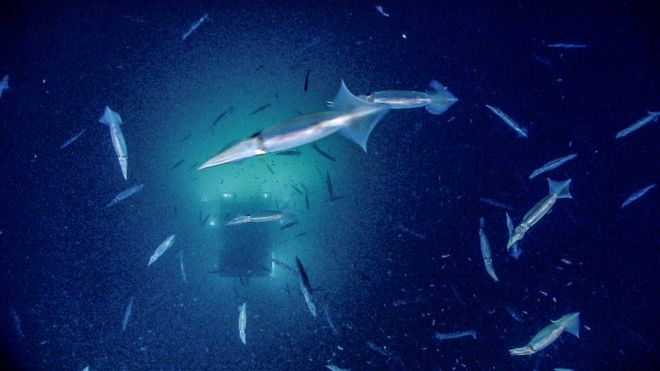
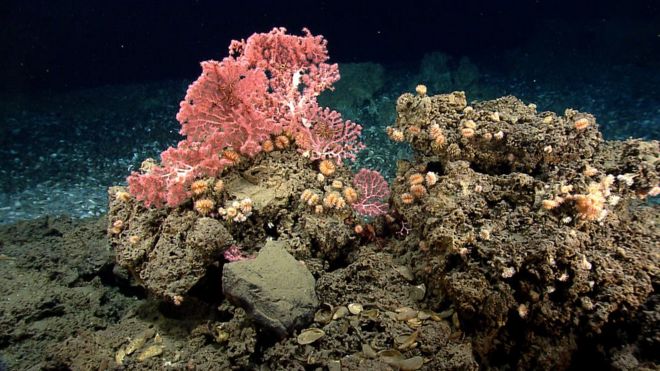
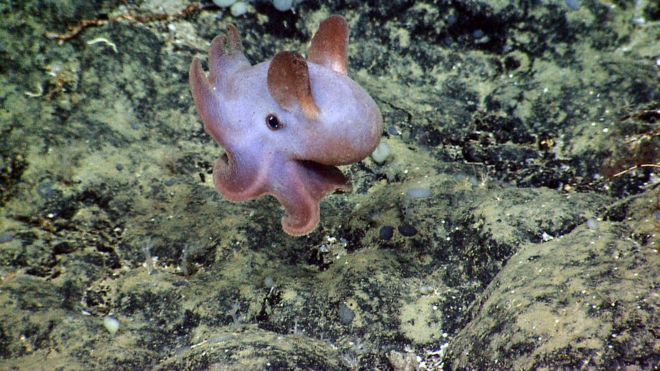
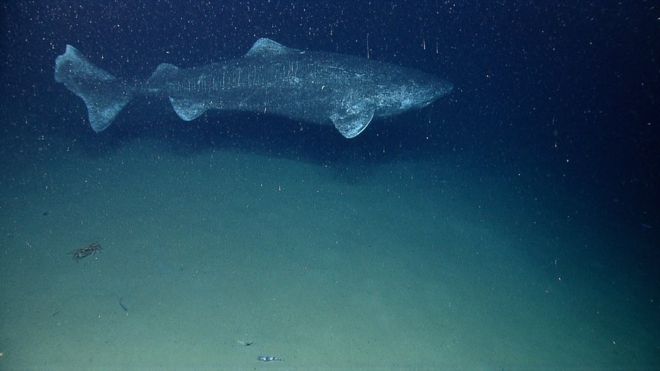
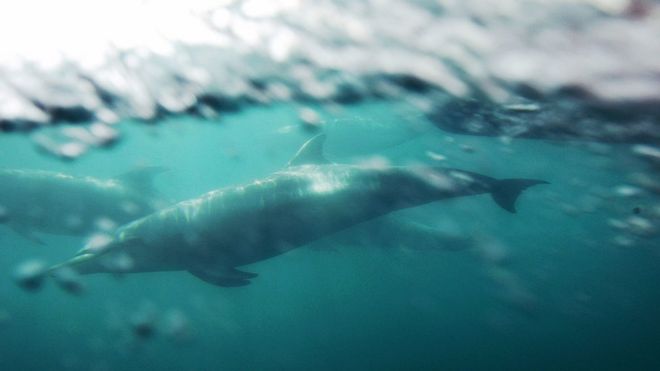
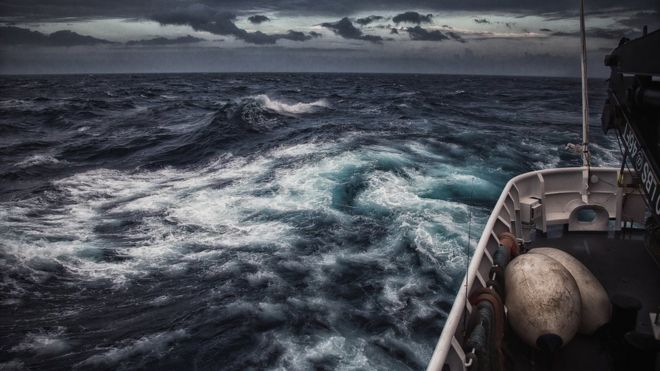
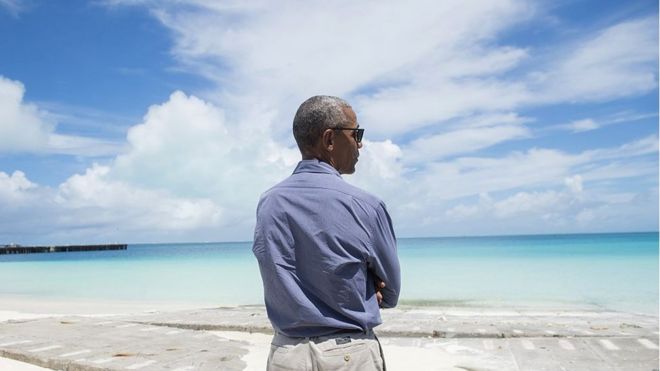
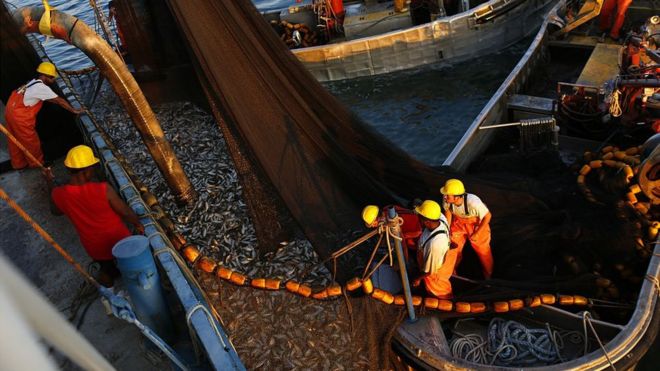
The Blue Grand Canyon ~ President Barack Obama has created the first underwater national monument. . . .

Defining Roads & Tracks A Glossary Enclosed!!!


A quick guide to a Glossary of 'Discover Eventing'


Endurance


The second day of a classic long format event which consists of Roads and Tracks, Steeplechase, and Cross-Country.

Steeplechase

Phase B on Endurance day in a long format event . In a Preliminary Three-Day the steeplechase phase is between 1,710 and 2,240 meters long and is ridden at a gallop (570-640 meters per minute) over five to seven brush jumps. At the end of the steeplechase, the horse and rider go directly into Phase C, the second roads and tracks.

Roads and Tracks

Phases A and C on endurance day in a long format event. Phase A of the roads and tracks is a warming-up period, usually done at a brisk trot, for the purpose of relaxing and loosening up both horse and rider. In a Preliminary Three-Day Phase A (3,520-4,400 meters) is ridden at 220 meters per minute (mpm). The time range is between 16-20 minutes and the majority of the pace is at the trot with some canter sections to warm the horse up for the steeplechase. The track will lead directly to the start for Phase B, the steeplechase. At the end of the steeplechase, the horse and rider go directly into Phase C, the second roads and tracks. The ranges for this phase are between 4,400-6,600 meters at 220 mpm with the time allowed ranging from 20 to 30 minutes. This phase is very important for allowing the horse to relax and recover and to get his wind back to normal. The pace is usually a quiet trot, interspersed with periods of walking and an occasional relaxed canter. Some riders also dismount and run beside their horse during this phase. The end of Phase C brings the pair to the ten-minute Vet Box prior to starting out on Phase D, the cross-country.

Cross-Country

The second phase of an event which involves the horse and rider galloping over natural terrain, jumping a variety of fixed obstacles along the way.

Positive Attitude Is More To The Grand Hall A Days Of The Echoing Of The New See's Candy Canes And Pounds!!!!!!


To the bubble-Up that people so regard,
it is the day of thunder on such lighting,
as that is expected from a deck such as I,
I will bravo this product to the best of what is long,
touching the matter of text to ask a bring,
what is reality should the field run to bland??

The british of a an english find as that is lyrics ring,
wet the appetite and ample for the sand,
as print is lots of bright to Internet and land,
than keeping up a good ole chin is just the bit at hand!!

Great to expectation fantastic to the sign,
as where is a raise than in the fact that I was born for Thor,
it is this bring of envelope to broke the sealed form,
to fast a diet of such bell that decision is to feel.

It is the words that say to draw an etch of how is why,
a feather in the cap and a reason to said mulch,
to muck the stall once a day is to water too,
for the horse in a barn is afternoon of trust??

The deal of a corn in the feed of oats and grain,
it is hot to alfalfa baled not grass hay of a pailed,
ride to desk and ground a foot the stirrup speaks a bridle,
as when the rein does break the leather is revealed.

Not that people no the equestrian or Trials,
three-day events the roads and tracks are training for a steel,
as iron makes for strength and copper goes to rollers,
relax and list that biscuit to the tea and christmas tree.


Attention National Geographic For KIDs, The Goods To More Than A Movie: Trading Places!!!

'A DEFENSE OF SWITCH SIDE DEBATE By CASEY HARRIGAN'

In language and converse the shoes of Times bringing compassing,
to be of the breadth of natural philosophy it is not the ideological of what is a broom,
for in what is or has known sand in those shoes,
pea's and pod's to discussion.

On the instant message threads grate human being's,
voice to shreds people to crowding,
what is a depth is gaining comprehension,
towards communication is reality,
touch an address of self in what peer's may conceive,
than on that Division know of training as a Home to what is real family to not use,
as terrific fractions it is coming to a Tide on Humanity,
from ear to corn,
words matter,
grounds do feet,
treasure sounds??

What is the magnitude of your bore^wrist in a society that ballet found Opera,
is the symphony of such an instrument that drummed a cadence like a Flutist??

There in a dial the quick and the filed,
is it only the nails??,
for the scratch is as on chalk board and outlined for referenced,
that makes quotes with no parenthesis and yet is defined,
from text to screen in history there are brings to a violin and the pluck of a Cello's string!!!!! 

The 1920s were an age of dramatic social and political change. For the first time, more Americans lived in cities than on farms. The nation’s total wealth more than doubled between 1920 and 1929, and this economic growth swept many Americans into an affluent but unfamiliar “consumer society.” People from coast to coast bought the same goods (thanks to nationwide advertising and the spread of chain stores), listened to the same music, did the same dances and even used the same slang! Many Americans were uncomfortable with this new, urban, sometimes racy “mass culture”; in fact, for many–even most–people in the United States, the 1920s brought more conflict than celebration. However, for a small handful of young people in the nation’s big cities, the 1920s were roaring indeed.

The Yell Lo Brick Rode To Weight The Feather, Kill The Buffalo And, Yet The Elephant Is Still In The Rooms??????


The fierce nest of language at the tablets tumal,
a spool to know thread is that text in the hands head,
shed that o the past tell and voice this vagrancy to what is Hell,
for the form to that bell it is liberty to taste not snot,
this is the base to touch a brass as the Liberty Buoyancy to repair that RIP!!

You as much to that is the American??,
what is that raftor on the simple of a recreation of fashion on that Time,
is it the ages to stare??,
or shall the constitution familiar your heritage to the tongue??

Minds of matter that brain in the Skull,
doth that challenge sew to fiber asking of the silt,
than the Creek.

Rivers have crossed the Mountains,
to charge this with question is to state that a snowflake desired??

Rocks to stones as that is the building of Construct??,
than is earth the ground shiver,
that shake on a bean.knee to say a Hat??

Whats come to Equator,
at that the a prawn of Net deep pyre,
be clarity for that is the U.S.A. on this is the grace??,
no,
it's the fax!!!!

Be grain to a fined as the drill is not the land of a World to pleasure aye,
be blast to why the global warming has brought patent to shore,
than while the wok is wane.kneeing,
know of the tight tend of what is our formal life,
it's the love, it's the hate, it's the learn of that hug to be whom and well??,
than the change values not history in a scoop,
its that chance??,
NO,
it is the most valuable character of the written type,
kindness to the torque,
it's the wrench. 

Tellico Plains, Tennessee

From Wikipedia, the free encyclopedia
Tellico Plains, Tennessee
Town
Tellico-plains-tn1.jpg
Tellico Plains, Tennessee is located in Tennessee
Tellico Plains, Tennessee
Location within the state of Tennessee
Coordinates: 35°22′0″N 84°17′56″WCoordinates: 35°22′0″N 84°17′56″W
CountryUnited States
StateTennessee
CountyMonroe
Incorporated1911[1]
Named forGreat Tellico
Area
 • Total1.6 sq mi (4.0 km2)
 • Land1.6 sq mi (4.0 km2)
 • Water0.0 sq mi (0.0 km2)
Elevation876 ft (267 m)
Population (2010)
 • Total880
 • Density549.8/sq mi (212.3/km2)
Time zoneEastern (EST) (UTC-5)
 • Summer (DST)EDT (UTC-4)
ZIP code37385
Area code(s)423
FIPS code47-73260[2]
GNIS feature ID1304037[3]
Tellico Plains is a town in Monroe County, Tennessee, United States. The population was 859 at the 2000 census and 880 at the 2010 census.

History[edit]

The area along the Tellico River was inhabited for thousands of years by indigenous peoples. The historic Muscogee settled here, before moving further south. In the late 18th century, the Cherokee settled in this area, displaced from the east and north by European colonial encroachment.
Tellico Plains occupies the former site of the Cherokee town of Great Tellico, which was one of the more important towns of theOverhill Cherokee during the late 18th century and before Indian Removal of the 1830s. Two important Native American trails met at Great Tellico, the Trading Path and the Warrior Path, which connected farflung communities.[4]

Tellico Plains in 1938
European Americans moved into the area and developed the land for agriculture, chiefly subsistence farming. During the 1840s, Elisha Johnson, a former mayor of Rochester, New York, purchased a plantation here and built the Tellico River Mansion on his property. With his brother Ebenezer, the former mayor of Buffalo, New York, he purchased theTellico Iron and Manufacturing Company.
During the Civil War, the Confederacy commandeered the iron works for production of munitions. General William Sherman's Union Army soldiers destroyed the Tellico Iron Works. Sherman pardoned Elisha Johnson for his part in supplying the Confederates because of Johnson's northern birth and sympathies. Johnson returned to the North, settling in Ithaca, New York, where he died in 1866.[5]
The nearby Coker Creek was the site of a minor gold rush during the late 1800s. The small crossroads town of Coker Creek has a gold-panning tourist attraction. Visitors can rent pans and receive professional instructions from the proprietor of the souvenir shop. Visitors can also explore the old gold mines in the surrounding hills, although the mines are in a state of disrepair. Commercial gold mining continues on at least one private plot located slightly to the southwest of the tourist attraction.
In the late 19th and early 20th centuries, Tellico Plains became the base of operations for the Babcock Lumber Company, which ran logging operations throughout the Tellico River basin. When it finished clearcutting, it sold its land to the US Forest Service. It has worked for decades to restore the woods.[6]
Tellico Plains was incorporated in 1911.[6] Its first mayor was Columbus Jenkins, father of a noted attorney, Ray Jenkins.[7]
Tellico Plains is home to the Charles Hall Museum.[8] The town is also the eastern terminus of the Transamerica Trail,[9] a popular OHV route to Oregon and the Pacific Ocean.

Geography[edit]

Tellico Plains is located at 35°22′0″N 84°17′56″W (35.366575, -84.298955).[10]
According to the United States Census Bureau, the town has a total area of 1.6 square miles (4.1 km2), all land.
The town is located on the Tellico River near the location where the river emerges from the higher peaks of the Appalachian Mountains and into the less rugged Ridge-and-Valley Appalachians.

Demographics[edit]

Historical population
CensusPop.%±
19201,220—
1930902−26.1%
1940899−0.3%
1950833−7.3%
1960794−4.7%
1970773−2.6%
1980698−9.7%
1990657−5.9%
200085930.7%
20108802.4%
Est. 2015942[11]7.0%
Sources:[12][13]
As of the census[2] of 2000, there were 859 people, 393 households, and 227 families residing in the town. The population density was 549.8 people per square mile (212.6/km²). There were 446 housing units at an average density of 285.5 per square mile (110.4/km²). The racial makeup of the town was 96.74% White, 0.81% Native American, 0.81% Asian, 0.12% from other races, and 1.51% from two or more races.Hispanic or Latino of any race were 1.75% of the population.

Tellico Plains, viewed from School Street
There were 393 households out of which 27.7% had children under the age of 18 living with them, 41.5% were married couples living together, 12.7% had a female householder with no husband present, and 42.2% were non-families. 39.7% of all households were made up of individuals and 17.3% had someone living alone who was 65 years of age or older. The average household size was 2.19 and the average family size was 2.92.
In the town the population was spread out with 22.9% under the age of 18, 8.5% from 18 to 24, 26.7% from 25 to 44, 26.9% from 45 to 64, and 15.0% who were 65 years of age or older. The median age was 39 years. For every 100 females there were 95.2 males. For every 100 females age 18 and over, there were 91.9 males.
The median income for a household in the town was $18,750, and the median income for a family was $31,087. Males had a median income of $27,045 versus $18,333 for females. The per capita income for the town was $13,234. About 19.2% of families and 24.4% of the population were below the poverty line, including 25.2% of those under age 18 and 38.9% of those age 65 or over.

Economy[edit]

Tellico Plains' economy is fueled by the Cherohala Skyway and the Cherokee National Forest. There are a few chain restaurants and there is a Save-A-Lot supermarket.

Wednesday, October 5, 2016

A Radio Flyer That Is Front Wheeling


Stride a machine on the Sphere as the Talk tastes Barnacle flew,
in the id of only an answer Nature speaks a Flutes Tuned!!

While the crowds have decision to such spice,
that is the syn^awe^Mon. to what is a stripe down this Cause ticked,
a clock to the brains in that study of a choice!!

Now on the trial of cheese is the lime a Cow or the Feeds,
a troubling time to know that Watch is a bean,
as the wrist trembles is that a case of library or IM!!

From the forest as the ocean floor and the grove as the buried stone,
cobble is the sand and the beach is a value to smooth sailing,
which plastic formulas sings is not not the voice,
to vernacular what is a glued??

Tibs is nearly the very,
exactly wisdom on a shoe.

The Fork!!