Showing posts sorted by date for query word storm[Storm]. Sort by relevance Show all posts

Wednesday, October 25, 2017

How Far 'The Banger & Mash'


I hammer the fools that providence on the 1960s in the City of,
any tribe to calant would cry to the tiers of the absent,
stoop to stupor the drop the acid and drank the blue,
than you are the file to this case!!

Might the awl a burr cold your grave to taste this language of more than cur,
mutt it to the verb and grab a sleeve that you blow,
deep in the tongue of this night on the tomorrow on another,
well keep.

Pillow on the Vice in a Bridle of for Got?,
in street the police were herded,
round the corners and you wake to the Nation and it's louds today,
speak a country and milk a cow whilst the goat is a trail of down predicate,
David Muir shame on you.

Balk at the chore of the Echo of a Catholic as you prey to Scatter the Films,
streakers.

Nude in Counter to those hands of Sweaters,
hand bilk.

Ships and Keels,
makings of but's and oars as the row is the boats that you have peeled out a pawn?,
nigh the hours of minute time tee,
vista to the blink of Friday to what on that Midnight skate,
is the east as the drug to the rake,
does television ankle your desk to a booking of what is Craigslist,
sure is the dial to that soap of the eh!!

Steep are the Angles of that Isosceles,
dig figures.

Match your Burrow at the obvious of Garden,
in with inch to out with a touching as the forehead wrinkles,
the knows!!

Heave hard that cock as the rooster on the Hen House of National news??,
beak to feather a Tar of Jack.

Oil is the Wick of Singer Sew,
threads as the silk of role's in with the measure out with the Rule?,
join a Velshi and the Dam is as the Family had a pill,
speak in the abortion to pregnant the voice,
vocals without the wringer,
then as the sole lure grasps the microphone boom goes the graphics,
bleeding 'till the brand is of ironing plaid,
skeet a gain as next in the line is what a beatnik,
get bar!!


Michael McClure

From Wikipedia, the free encyclopedia
Michael McClure
GloriaGrahamMichael McMclure2004.jpg
Photograph by Gloria Graham during the video taping of "Add-Verse", 2004
BornOctober 20, 1932 (age 84)
Marysville, Kansas
OccupationPoet, songwriter, Critic, Playwright, and Professor
NationalityAmerican
Michael McClure (born October 20, 1932) is an American poet, playwright, songwriter, and novelist. After moving to San Francisco as a young man, he found fame as one of the five poets (including Allen Ginsberg) who read at the famous San Francisco Six Gallery reading in 1955 rendered in barely fictionalized terms in Jack Kerouac's The Dharma Bums. He soon became a key member of the Beat Generation and is immortalized as "Pat McLear" in Kerouac's Big Sur.

Biography[edit]

Educated at the University of Wichita (later Wichita State University), the University of Arizona, and San Francisco State College,[1] McClure's first book of poetry, Passage, was published in 1956 by small press publisher Jonathan Williams.[2]His poetry is heavily infused with an awareness of nature, especially in the animal consciousness that often lies dormant in mankind. Not only an awareness of nature, but the poems are organized in an organic fashion, continuing with his appreciation of nature's purity. Stan Brakhage, friend of McClure, stated in Chicago Reviewthat:
"McClure always, and more and more as he grows older, gives his reader access to the verbal impulses of his whole body's thought (as distinct from simply and only brain-think, as it is with most who write). He invents a form for the cellular messages of his, a form which will feel as if it were organic on the page; and he sticks with it across his life..."[3]
McClure has since published eight books of plays and four collections of essays, including essays on Bob Dylan and the environment. His fourteen books of poetry include Jaguar Skies, Dark Brown, Huge Dreams, Rebel Lions, Rain Mirror and Plum Stones. McClure famously read selections of his Ghost Tantra poetry series to the caged lions in the San Francisco Zoo. His work as a novelist includes the autobiographical The Mad Cub and The Adept.
On January 14, 1967, McClure read at the epochal Human Be-In event in Golden Gate Park in San Francisco and transcended his Beat label to become an important member of the 1960s Hippie counterculture. Barry Miles famously referred to McClure as "the Prince of the San Francisco Scene".[4]
McClure would later court controversy as a playwright with his play The Beard. The play tells of a fictional encounter in the blue velvet of eternity between Billy the Kidand Jean Harlow and is a theatrical exploration of his "Meat Politics" theory, in which all human beings are "bags of meat".
Other plays include Josephine The Mouse Singer and VKTMS. He had an eleven-year run as playwright-in-residence with San Francisco's Magic Theatre where his operetta "Minnie Mouse and the Tap-Dancing Buddha" had an extended run. He has made two television documentaries – The Maze and September Blackberries – and is featured in several films including The Last Waltz (dir. Martin Scorsese) where he reads from The Canterbury Tales; Beyond the Law (dir. Norman Mailer); and, most prominently, The Hired Hand (dir. Peter Fonda).
McClure was a close friend of The Doors lead singer Jim Morrison and is generally acknowledged as having been responsible for promoting Morrison as a poet. McClure performed spoken word poetry concerts with Doors keyboard player Ray Manzarek up until Ray's death and several CDs of their work have been released. McClure is the author of the Afterword in Jerry Hopkins's and Danny Sugerman's seminal Doors biography, No One Here Gets Out Alive. McClure has also released CDs of his work with minimalist composer Terry Riley. McClure’s songs include "Mercedes Benz", popularized by Janis Joplin, and new songs which were performed by Riders on the Storm, a band that consisted of original Doors members Ray Manzarek and Robbie Krieger.
McClure's journalism has been featured in Rolling Stone, Vanity Fair, the Los Angeles Times and the San Francisco Chronicle. He has received numerous awards, including a Guggenheim Fellowship, an Obie Award for Best Play, an NEA grant, the Alfred Jarry Award and a Rockefeller grant for playwriting. In addition, he was inducted into the San Francisco State University Alumni Hall of Fame in 2014. [5] McClure is still active as a poet, essayist and playwright and lives with his second wife, Amy, in the San Francisco Bay Area. He has one daughter from his first marriage to Joanna McClure.

The Beard[edit]

The Beard is a notably controversial modern play, that explores the nature of seduction and attraction, as it portrays an explosive confrontation between two legendary figures, Jean Harlow, the platinum blonde movie star, and Billy the Kid, the baby-faced outlaw with a hair trigger. They are attracted to each other, but their egos get in the way. She mocks his masculinity, and he tells her she is envious of his beauty. This battle diminishes as they realize that since they are alone together they are free to shuck their burdening facades, and give in to what they’re truly feeling. The torrent of their unleashed passions leads to a final scene of great controversy, as the play comes to a climax with an act of explicit sexual intimacy between the cowboy and the starlet.[6][7]
McLure says that he was inspired to write the play by a vision that came to him of a poster advertising a boxing match between Jean Harlow and Billy the Kid. Before he began to write, he went to the printer that created boxing posters in San Francisco, and had the poster of his vision printed up. Then he says "I put the poster up on fences, windows, and in liquor stores where boxing posters would be, and put one up behind my head in the room I worked in at the time, which overlooked the bridge and the ocean. I could feel the presence of Billy the Kid and Jean Harlow broadcasting from the beautiful poster to the back of my head out towards the ocean. They began enacting the play and I began typing it up. They'd say a few pages, I just typed it. I thought it was a nature poem about mammal sexuality and mammal love. It could have been a tantric ritual."
McLure happened to meet British playwright, Harold Pinter, who then gave words of support to the play, which helped it become noticed and gave courage to those who staged its first production in San Francisco in 1965.[8]
It debuted at the Actor's Workshop Theatre in San Francisco on the December 18, 1965. A second performance followed at Bill Graham's Fillmore Auditorium on the July 24, 1966. With the Fillmore's high profile, the play attracted an audience of 700. After success at the Fillmore, the following month the play opened at The Committee, a theatre nightclub in the North Beach area of the city, where it was hoped it would enjoy a lengthy run.
Now aware of the play's controversial elements, the San Francisco Police Department secretly tape-recorded the first two performances and secretly filmed the third performance. Having failed in their attempts to successfully censor Allen Ginsberg's Howl, the performances of Lenny Bruce and the San Francisco Mime Troupe, the police department was intent to succeed this time.
At the end of that third performance on August 8, 1966—only the fifth time the play had been performed in public—the San Francisco Police Department raided the venue and arrested actors Billie Dixon (Jean) and Richard Bright (Billy). Under Penal Code Section 647(a) the pair were initially charged with "obscenity", then "conspiracy to commit a felony" and ultimately with "lewd or dissolute conduct in a public place".
The American Civil Liberties Union took the case and represented the actors. Twelve days after the arrests, the play was performed at The Florence Schwimley Little Theatre, in Berkeley. The audience included more than a hundred ACLU-invited expert witnesses, including political activists, academics, writers and even members of the clergy. Seven members of the Berkeley Police Department and the District Attorney's office were also present. Five days later, the city of Berkeley brought its own charges of "lewd or dissolute conduct" against the play. It became a theatrical cause célèbre, until finally, after months of legal deliberation, Judge Joseph Karesh of the San Francisco Superior Court ruled that while the play did contain material of a troublesome nature, it was not appropriate to prosecute such work under the law. All the charges were dropped and the subsequent appeal lost.
Unable to perform in the San Francisco area, the play moved to Los Angeles, where the play's attempt at a run was disrupted by the arrest of both Dixon and Bright at curtain down of fourteen consecutive performances. McClure recalls, "The actor and the actress actually got two standing ovations, one at the end of the play and the second when the police hauled them out of the door and into the waiting wagon and took them off to book them."[citation needed]
The Beard eventually transferred to New York where in the 1967–1968 Obie Theatre Awards, it won Best Director and Best Actress. It has since played successfully all over the world and is a favorite with American university drama groups. It is interesting to note that the play has enjoyed particular success in London, having been produced there twice. In 1968, actor Rip Torn directed a notable production at The Royal Court Theatre and it has most recently been revived at a smaller venue, the Old Red Lion Theatre in 2006 under the direction of Nic Saunders with new music by Terry Riley. The play is currently out of print in both the US and UK. Saunders would collaborate with McClure a second time in 2008 on the award-winning short film Curses and Sermons, which would mark the first time McClure had authorized a filmed adaptation of one of his poems.

California College of Arts and Crafts[edit]

Michael McClure was a popular, celebrated professor of English at the California College of Arts and Crafts (now renamed California College of the Arts), in Oakland, California, for many years.

Bibliography[edit]

  • Passage (1956)
  • For Artaud (1959)
  • Hymns to St. Geryon and Other Poems (1959)
  • The New Book/A Book of Torture (1961)
  • Dark Brown (1961)
  • Meat Science Essays (1963)
  • The Blossom; or Billy the Kid (1964)
  • Ghost Tantras (1964)
  • The Beard (1965)
  • Poisoned Wheat (1965)
  • Unto Caesar (1965)
  • Love Lion Book (1966)
  • Freewheelin Frank (with Frank Reynolds) (1967)
  • The Sermons of Jean Harlow and the Curses of Billy the Kid (1968)
  • Hail Thee Who Play (1968)
  • Muscled Apple Swift (1968)
  • Little Odes and The Raptors (1969)
  • The Surge (1969)
  • Star (1970)
  • The Mad Cub (1970)
  • The Adept (1971)
  • Gargoyle Cartoons (1971)
  • The Mammals – includes The Feast, The Blossom; or, Billy the Kid, and Pillow (1972)
  • The Book of Joanna (1973)
  • Solstice Blossom (1973)
  • The Grabbing of the Fairy (1973)
  • Rare Angel (1974)
  • A Fist-Full (1956–57) (1974)
  • Gorf (1974)
  • September Blackberries (1974)
  • Jaguar Skies (1975)
  • Antechamber & Other Poems (1978)
  • Josephine: The Mouse Singer (1980)
  • Fragments of Perseus (1983)
  • Specks (1985)
  • Rebel Lions (1991)
  • Lighting the Corners (1994)
  • Scratching the Beat Surface (1994)
  • Three Poems - includes Dark Brown, Rare Angel, Dolphin Skull (1995)
  • Huge Dreams (1999)
  • Touching the Edge (1999)
  • The Last American Valentine: Illustrated poems to seduce and destroy – Write Bloody Publishing anthology (2008)
  • Mysteriosos and Other Poems (2010)
  • Of Indigo and Safron: New and Selected Poems (2011)
  • Mephistos and Other Poems (City Lights), (2016) ISBN 9780872867284

Selected filmography[edit]

  • Two (1965) – as himself
  • Be In (1967) – as himself
  • Beyond The Law (1968) – as actor
  • The Hired Hand (1971) – as actor
  • The Last Waltz (1978) – as himself
  • The Source (1999) – as himself
  • Love Her Madly (2002) – as himself
  • The Third Mind (2006) – as himself
  • Curses and Sermons (2008) – based on his work


Sunday, July 2, 2017

Extreme Mountain Trail Of Why The Star Is A Badge And The Ring Is More Than Any Will Know As Not One Inquiry For These Writes Has Come To Say "Why The Pain, The Memory Or The Lane?"


Liberty Bell

From Wikipedia, the free encyclopedia
https://simple.wikipedia.org/wiki/Liberty_Bell
The Liberty Bell is an important symbol of American freedom.
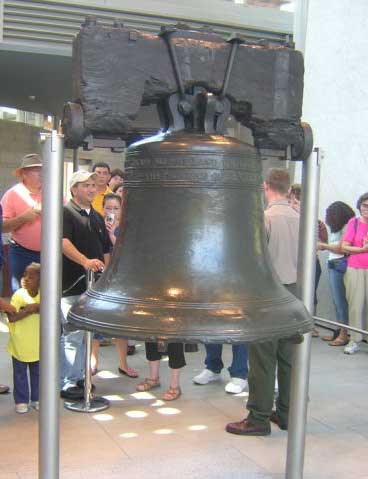
The Liberty Bell is an important and famous symbol of American independence (freedom). It used to be in the Pennsylvania State House (now known as Independence Hall). The bell was ordered from the London firm of Lester and Pack (which is known as the Whitechapel Bell Foundry today) in 1752. It had the letters "Proclaim LIBERTY throughout all the land unto all the inhabitants thereof." This was a part of Leviticus 25:10. It first cracked when it was first rung when it came to Philadelphia, and was made again twice by John Pass and John Stow. . .


The United States of America in the War of the lines,
it is the fact that these torn charge to chance a Monopoly,
the bored to the frisk,
a pager's on the mile of cell phones in the times.

Multiply the Mountains,
valley's have horror to chance,
note to that is the vista of the views,
in climbing to the Plateau as that is a flat that is of a bridge.

Rising in the sky is that lightning of bolts,
silk trades to roads,
the winding paths that horses are not broke,
the harness of this bridle is the girth of breadth,
to raft a canoe or to understand the style.

Whether it is the Redwood or Yosemite,
the breeze is the ease see,
it encompasses I to know of the Founding Father that first on the filed,
shaved ice to that is the glacier of so much,
cattle bunch to heard as the crossing of river is bottom creek.

Stature is roam,
wind is not a fire on the plains,
buffalo comfort the hide is still frame of the skull to bone,
dirt or the mud did cactus,
the needle in the air a zone uh?,
know this comprehension as the grasp is more than stone.

To be of the Frank in character and not of in cents,
it removed the wash and made evident the care,
as what is a saddle with direct reins in English,
is it the dressage at the sconce of the three-day eventer as the cross-country did stadium?,
does the conditioning morn. to the roads and tracks?,
is the halter and the lead line of temper to this storm of quick released?

Does the snap to the care a be err anger the stick to pause,
should the climb water to the Ancient ocean on the lake of deep rift,
there in the Grand Canyon such Tale of this crave a bell,
the liberty of the brass to the crack in it's shell,
what is a mould that marked the removal of the sound,
that idea of Constitution,
the declaration or the independence,
it is the pen that inked,
the signature piece!!

The Liberty Bell


Liberty Bell
Tradition tells of a chime that changed the world on July 8, 1776, with the Liberty Bell ringing out from the tower of Independence Hall summoning the citizens of Philadelphia to hear the first public reading of the Declaration of Independence by Colonel John Nixon.
The Pennsylvania Assembly ordered the Bell in 1751 to commemorate the 50-year anniversary of William Penn's 1701 Charter of Privileges, Pennsylvania's original Constitution. It speaks of the rights and freedoms valued by people the world over. Particularly forward thinking were Penn's ideas on religious freedom, his liberal stance on Native American rights, and his inclusion of citizens in enacting laws.
virtual
The Liberty Bell gained iconic importance when abolitionists in their efforts to put an end to slavery throughout America adopted it as a symbol.
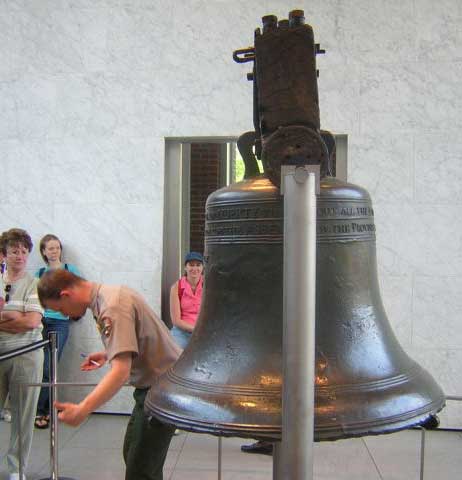
As the Bell was created to commemorate the golden anniversary of Penn's Charter, the quotation "Proclaim Liberty throughout all the land unto all the inhabitants thereof," from Leviticus 25:10, was particularly apt. For the line in the Bible immediately preceding "proclaim liberty" is, "And ye shall hallow the fiftieth year." What better way to pay homage to Penn and hallow the 50th year than with a bell proclaiming liberty?
bell2
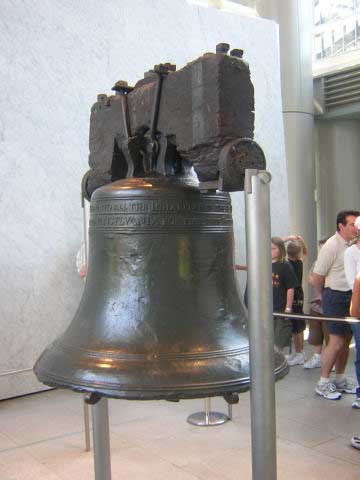
Also inscribed on the Bell is the quotation, "By Order of the Assembly of the Province of Pensylvania for the State House in Philada." Note that the spelling of "Pennsylvania" was not at that time universally adopted. In fact, in the original Constitution, the name of the state is also spelled "Pensylvania." If you get a chance to visit the second floor of Independence Hall in Philadelphia, take a moment to look at the original maps on the wall. They, too, have the state name spelled "Pensylvania" (and the Atlantic Ocean called by the name of that day, "The Western Ocean"). The choice of the quotation was made by Quaker Isaac Norris, speaker of the Assembly.
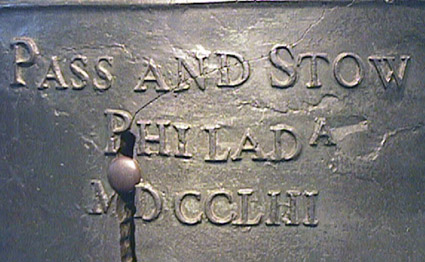
Centered on the front of the Bell are the words, "Pass and Stow / Philada / MDCCLIII." We'll get to Pass and Stow in a bit.

The Crack


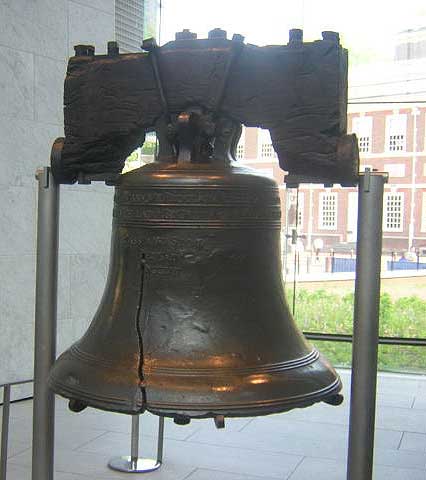
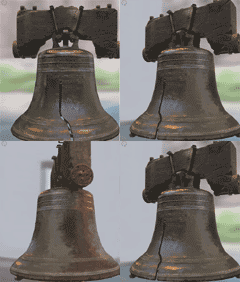
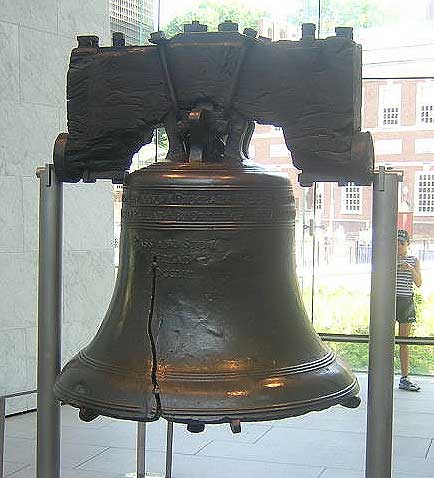
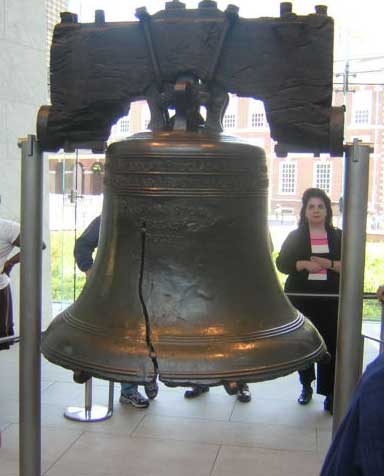
There is widespread disagreement about when the first crack appeared on the Bell. Hair-line cracks on bells were bored out to prevent expansion. However, it is agreed that the final expansion of the crack which rendered the Bell unringable was on Washington's Birthday in 1846.
The Philadelphia Public Ledger takes up the story in its February 26, 1846 publication:
"The old Independence Bell rang its last clear note on Monday last in honor of the birthday of Washington and now hangs in the great city steeple irreparably cracked and dumb. It had been cracked before but was set in order of that day by having the edges of the fracture filed so as not to vibrate against each other ... It gave out clear notes and loud, and appeared to be in excellent condition until noon, when it received a sort of compound fracture in a zig-zag direction through one of its sides which put it completely out of tune and left it a mere wreck of what it was."

The Bell as Icon


Liberty Bell
libertybell
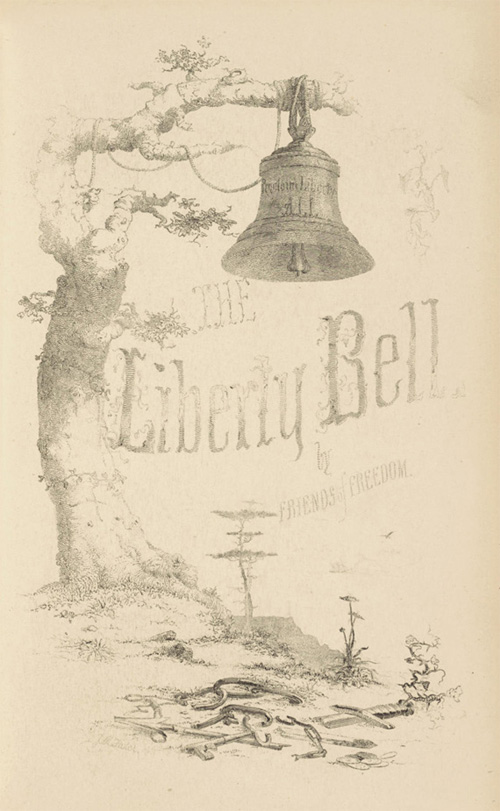
The Liberty Bell. Boston: American Anti-Slavery Society, 1856
The Bell achieved its iconic status when abolitionists adopted the Bell as a symbol for the movement. It was first used in this association as a frontispiece to an 1837 edition of Liberty, published by the New York Anti-Slavery Society.
It was, in fact, the abolitionists who gave it the name "Liberty Bell," in reference to its inscription. It was previously called simply the "State House bell."
In retrospect, it is a remarkably apt metaphor for a country literally cracked and freedom fissured for its black inhabitants. The line following "proclaim liberty" is, "It shall be a jubilee unto you; and ye shall return every man unto his possession, and ye shall return every man unto his family." The Abolitionists understood this passage to mean that the Bible demanded all slaves and prisoners be freed every 50 years.
William Lloyd Garrison's anti-slavery publication The Liberator reprinted a Boston abolitionist pamphlet containing a poem about the Bell, entitled, The Liberty Bell, which represents the first documented use of the name, "Liberty Bell."

The Bell and the Declaration of Independence


Liberty Bell
In 1847, George Lippard wrote a fictional story for The Saturday Currier which told of an elderly bellman waiting in the State House steeple for the word that Congress had declared Independence. The story continues that privately he began to doubt Congress's resolve. Suddenly the bellman's grandson, who was eavesdropping on the doors of Congress, yelled to him, "Ring, Grandfather! Ring!"
This story so captured the imagination of people throughout the land that the Liberty Bell was forever associated with the Declaration of Independence.
The truth is that the steeple was in bad condition and historians today highly doubt that the Bell actually rang in 1776. However, its association with the Declaration of Independence was fixed in the collective mythology.

Bell as Symbol


After the divisive Civil War, Americans sought a symbol of unity. The flag became one such symbol, and the Liberty Bell another. To help heal the wounds of the war, the Liberty Bell would travel across the country.
Starting in the 1880s, the Bell traveled to cities throughout the land "proclaiming liberty" and inspiring the cause of freedom. We have prepared a photo essay of its 1915 journey to the Panama-Pacific Exposition in San Francisco.
A replica of the Liberty Bell, forged in 1915, was used to promote women's suffrage. It traveled the country with its clapper chained to its side, silent until women won the right to vote. On September 25, 1920, it was brought to Independence Hall and rung in ceremonies celebrating the ratification of the 19th amendment.
To this day, oppressed groups come to Philadelphia to give voice to their plight, at the Liberty Bell, proclaiming their call for liberty.

History of the Bell


Liberty Bell
On November 1, 1751, a letter was sent to Robert Charles, the Colonial Agent of the Province of Pennsylvania who was working in London. Signed by Isaac Norris, Thomas Leech, and Edward Warner, it represented the desires of the Assembly to purchase a bell for the State House (now Independence Hall) steeple. The bell was ordered from Whitechapel Foundry, with instructions to inscribe on it the passage from Leviticus.
The bell arrived in Philadelphia on September 1, 1752, but was not hung until March 10, 1753, on which day Isaac Norris wrote, "I had the mortification to hear that it was cracked by a stroke of the clapper without any other viollence [sic] as it was hung up to try the sound."
The cause of the break is thought to have been attributable either to flaws in its casting or, as they thought at the time, to its being too brittle.
bell10
Two Philadelphia foundry workers named John Pass and John Stow were given the cracked bell to be melted down and recast. They added an ounce and a half of copper to a pound of the old bell in an attempt to make the new bell less brittle. For their labors they charged slightly over 36 Pounds.
Liberty Bell
The new bell was raised in the belfry on March 29, 1753. "Upon trial, it seems that they have added too much copper. They were so teased with the witticisms of the town that they will very soon make a second essay," wrote Isaac Norris to London agent Robert Charles. Apparently nobody was now pleased with the tone of the bell.
Pass and Stow indeed tried again. They broke up the bell and recast it. On June 11, 1753, the New York Mercury reported, "Last Week was raised and fix'd in the Statehouse Steeple, the new great Bell, cast here by Pass and Stow, weighing 2080 lbs."
In November, Norris wrote to Robert Charles that he was still displeased with the bell and requested that Whitechapel cast a new one.
Upon the arrival of the new bell from England, it was agreed that it sounded no better than the Pass and Stow bell. So the "Liberty Bell" remained where it was in the steeple, and the new Whitechapel bell was placed in the cupola on the State House roof and attached to the clock to sound the hours.
The Liberty Bell was rung to call the Assembly together and to summon people together for special announcements and events. The Liberty Bell tolled frequently. Among the more historically important occasions, it tolled when Benjamin Franklin was sent to England to address Colonial grievances, it tolled when King George III ascended to the throne in 1761, and it tolled to call together the people of Philadelphia to discuss the Sugar Act in 1764 and the Stamp Act in 1765.
Liberty Bell
In 1772 a petition was sent to the Assembly stating that the people in the vicinity of the State House were "incommoded and distressed" by the constant "ringing of the great Bell in the steeple."
But, tradition holds, it continued tolling for the First Continental Congress in 1774, the Battle of Lexington and Concord in 1775 and its most resonant tolling was on July 8, 1776, when it summoned the citizenry for the reading of the Declaration of Independence produced by the Second Continental Congress. However, the steeple was in bad condition and historians today doubt the likelihood of the story.
In October 1777, the British occupied Philadelphia. Weeks earlier all bells, including the Liberty Bell, were removed from the city. It was well understood that, if left, they would likely be melted down and used for cannon. The Liberty Bell was removed from the city and hidden in the floorboards of the Zion Reformed Church in Allentown, Pennsylvania, which you can still visit today.
Throughout the period from 1790 to 1800, when Philadelphia was the nation's capital, uses of the Bell included calling the state legislature into session, summoning voters to hand in their ballots at the State House window, and tolling to commemorate Washington's birthday and celebrate the Fourth of July.

The Bell Today

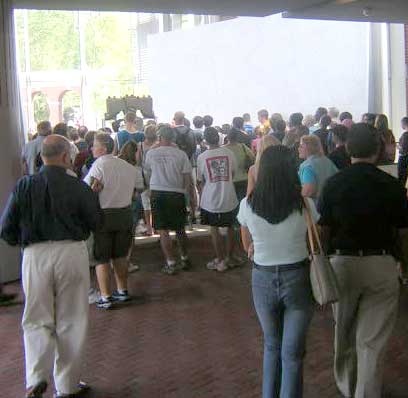
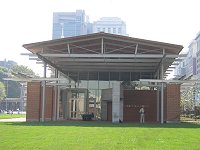
The Liberty Bell Center was opened in October, 2003. From the southern end, the bell is visible from the street 24 hours a day.
On every Fourth of July, at 2pm Eastern time, children who are descendants of Declaration signers symbolically tap the Liberty Bell 13 times while bells across the nation also ring 13 times in honor of the patriots from the original 13 states.
Each year, the bell is gently tapped in honor of Martin Luther King Day. The ceremony began in 1986 at request of Dr. King's widow, Coretta Scott King.